For clinicians
VR exposure therapy, with CBT and EMDR protocols.
PsyTech VR is clinical VR exposure therapy software for mental‑health professionals, used in 60+ clinics, hospitals, and universities. U.S.‑patented, and built with a named clinical advisory board.
U.S. Patent
20230320643‑A1†
United States Patent & Trademark Office
Compliance
HIPAA · GDPR
Protocols
CBT & EMDR
Headsets
Quest · PICO · HTC
Library
New scenarios monthly
The session
Starting a session should feel like opening an app on your phone.
The rest of the platform follows from it. A clinician launches, guides, and measures a session from the computer already on their desk.
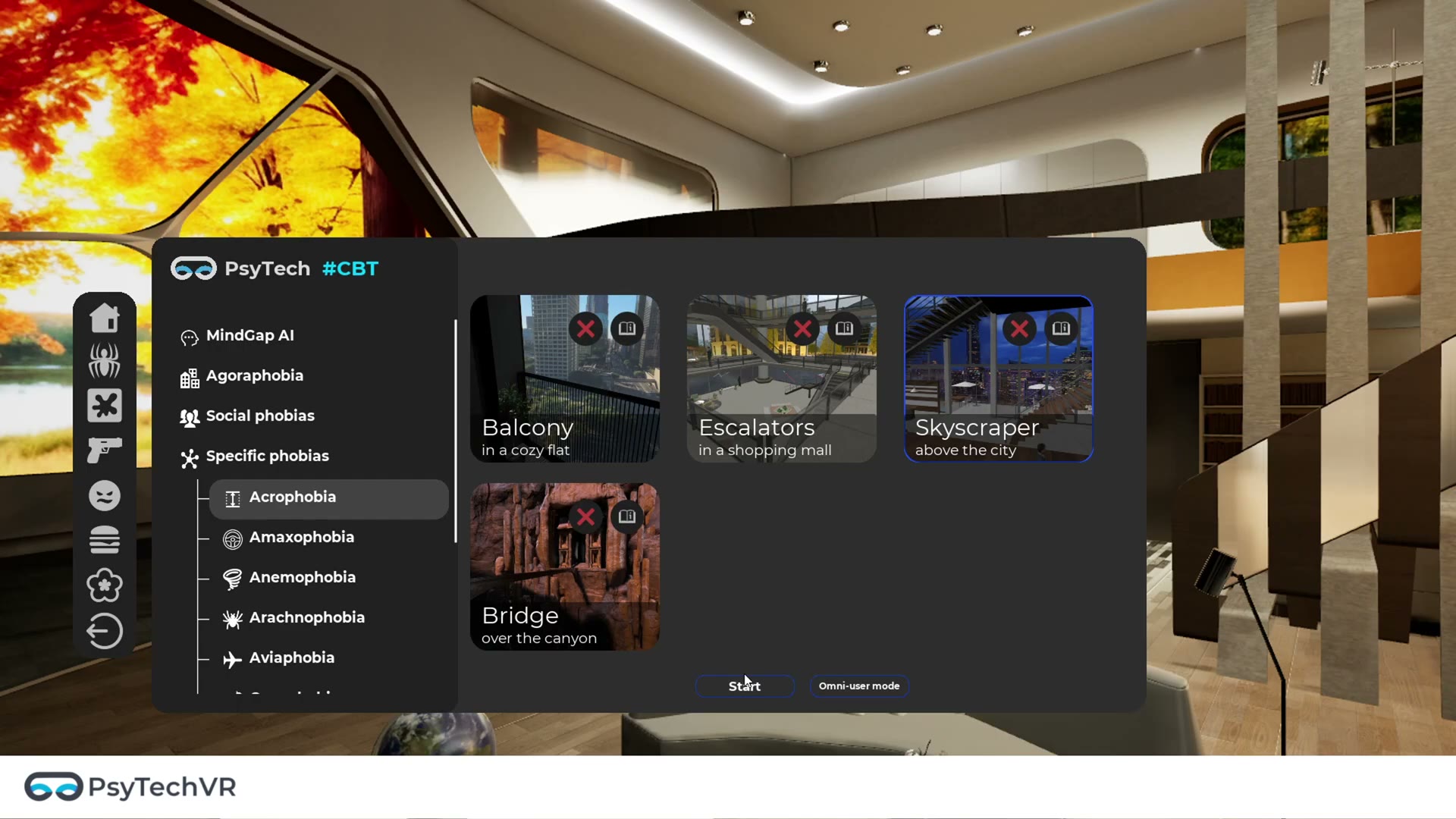
Start any scenario from your desktop.
Heights, flying, public speaking: the whole library opens from your Mac or Windows desktop. Choose a scenario and the headset loads it.
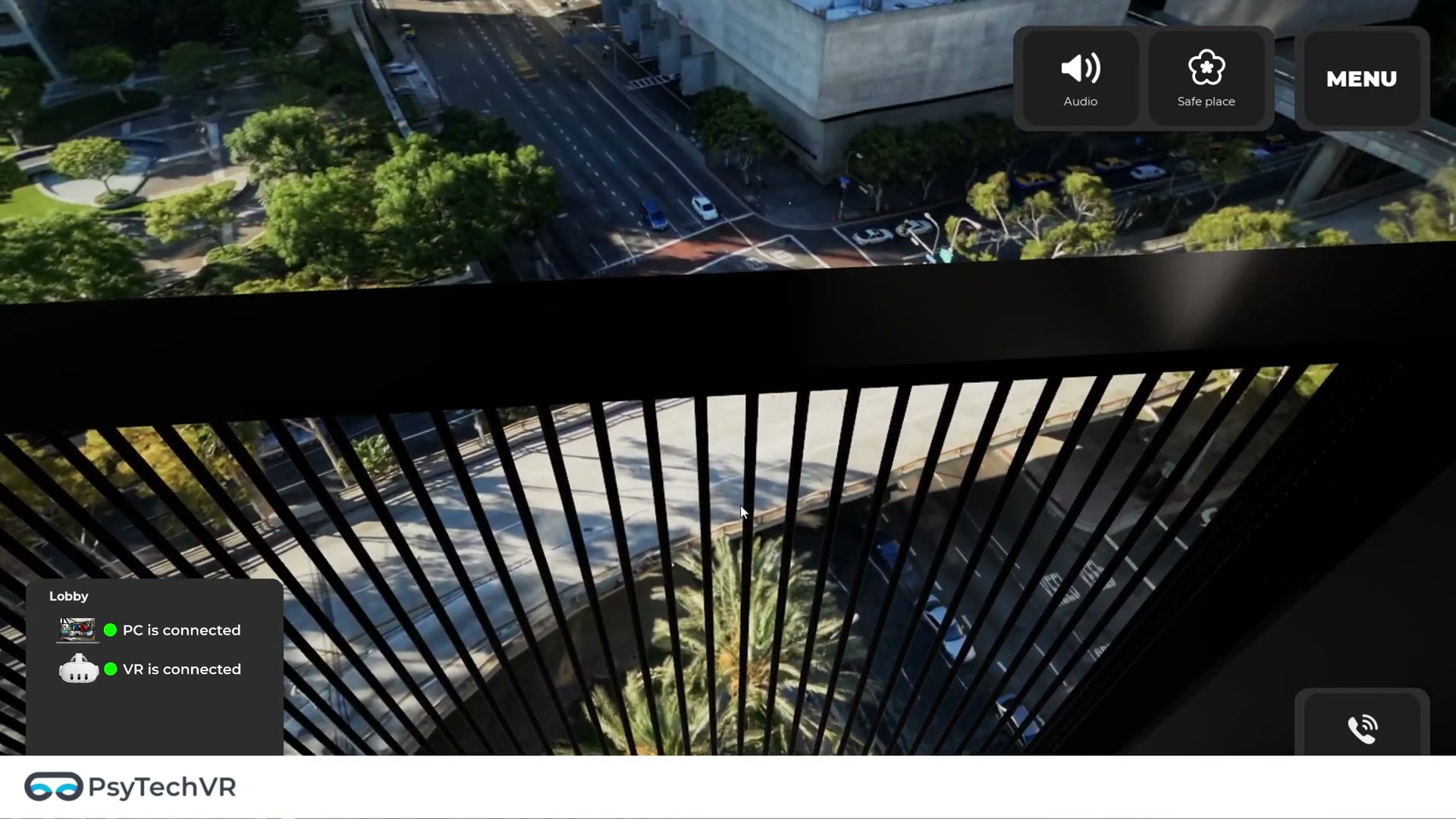
See what your client sees.
Their view streams live to your screen. Hold the scene, step in beside them as an avatar, or move them to a safe place.
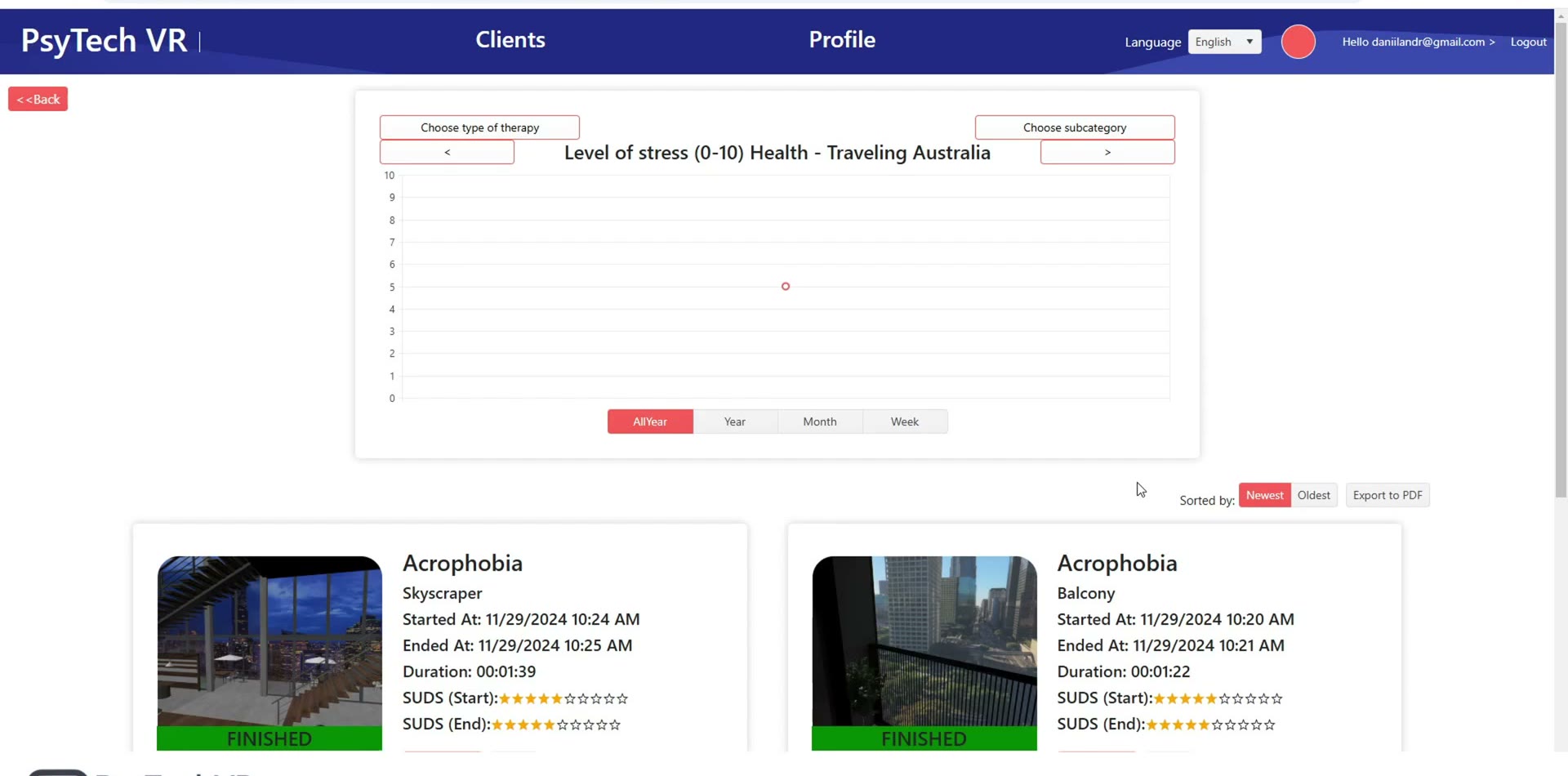
The session records itself.
Distress ratings, session history, and biofeedback land in your dashboard while you work, ready to pull into your notes.
The only expertise it asks for is yours.
There's no rig to set up and no technician to call.
Who it's for
Built for the person running the session.
Private practice, clinics and health systems, and universities each run sessions differently. Start with the one that matches yours.

Private practice
Run exposure sessions with one headset and your laptop, in the office or remote.
For private practice →
Clinics & health systems
Standardize exposure therapy across teams, including veteran‑focused PTSD programs.
For clinics & systems →
Universities & training
Teach students on the same platform they'll use in practice.
For universities →Running a veteran or first‑responder program? See the veteran and PTSD programs.
The advisory board
Built with the clinicians who pioneered this work.
These psychotherapists and psychologists have shaped the product and its clinical methodology since 2020. Each is named here, with credentials.
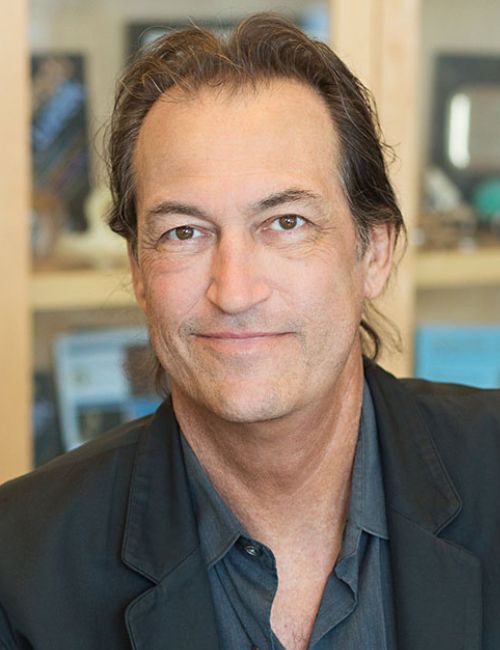
Creator of Bravemind
Dr. Albert “Skip” Rizzo
Clinical psychologist with 30+ years in VR research. Developed VR tools for PTSD, TBI, and autism, including Bravemind, the U.S. military's VR exposure system for PTSD.

Dr. Udi Oren
Clinical psychologist, PhD. Past President of EMDR Europe; chief instructor of the EMDR method in Israel.

Dr. Gwilym Roddick
Psychotherapist (DSW, LCSW). Founder of CBT of Central and South Florida; CBT/ERP/ACT expert.
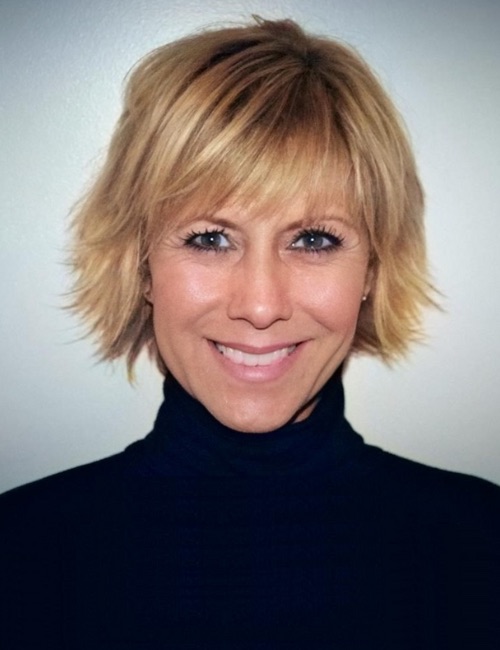
Dr. Lynn Panattoni
Licensed clinical psychologist specializing in PTSD, anxiety, and integrative mental health.

Dr. Gianni Serra
Clinical and digital psychologist; Italian Society of Cognitive Behavioral Therapy.

Dr. Richard Lamb
Professor, University of Georgia. PhD in science education and educational measurement; neuroscience and VR in learning.
In memoriam
Dr. Elizabeth McMahon
1950–2024. A pioneer of VR‑assisted anxiety treatment whose guidance shaped this platform. Remembered with gratitude.
In practice
Where it's already in use.
From solo practices to psychiatric hospitals, national health services, and research universities.
I was an early adopter of VR PTSD training in the US since the early 2000s. However, in 2023, when I discovered PsyTech VR, I realized that it is the most advanced system available for Mental Health specialists.
 James Husband
Clinical psychologist (CBT/EMDR), East Sussex Healthcare NHS Trust
If you're looking to enhance your therapy approach, don't hesitate to embrace VR with PsyTech… It specifically helps those suffering from anxiety, phobias, PTSD, and anger.
 Dr. Gwilym Roddick
Psychotherapist (DSW, LCSW), founder of CBT of Central and South Florida
The program boasts a user‑friendly and intuitive interface, and we extend our sincere appreciation to the team for localizing the system in Czech.
 Dr. Jana Maresova
Psychiatrist, Psychiatric Hospital Havlíčkův Brod
3.75×
more concentrated and emotionally connected to content
4×
more focused than traditional learning
275%
more confident applying skills learned in VR
16×
more likely to recall information
Industry findings on immersive learning generally, not clinical outcomes for PsyTech VR. Published by PsyTech VR; sources: Pfizer, PwC, Invista, PubMed.
The library
From first fear to safe place.
Four clinical categories, plus a relaxation suite so every session has somewhere calm to land.
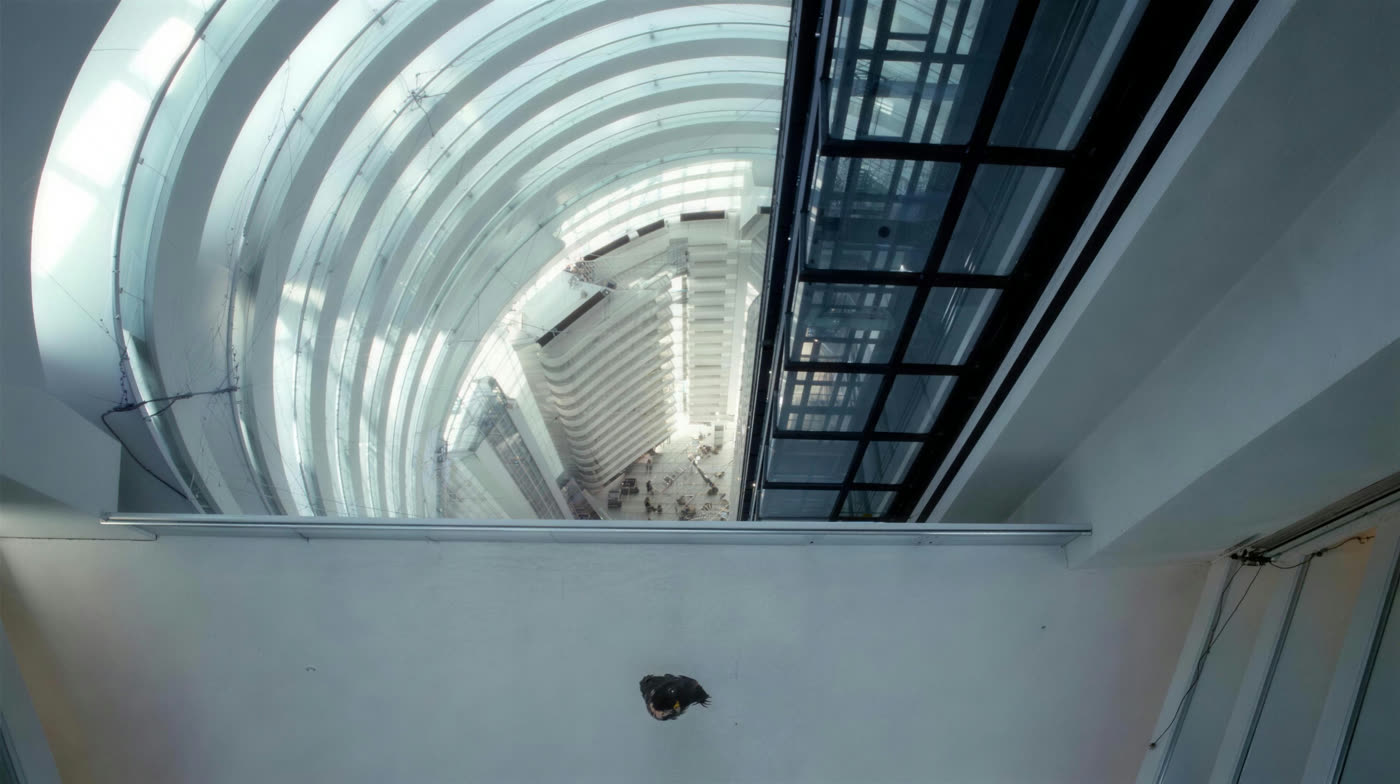
Fears & phobias
Agoraphobia, social phobia, and the specific fears clients bring you.
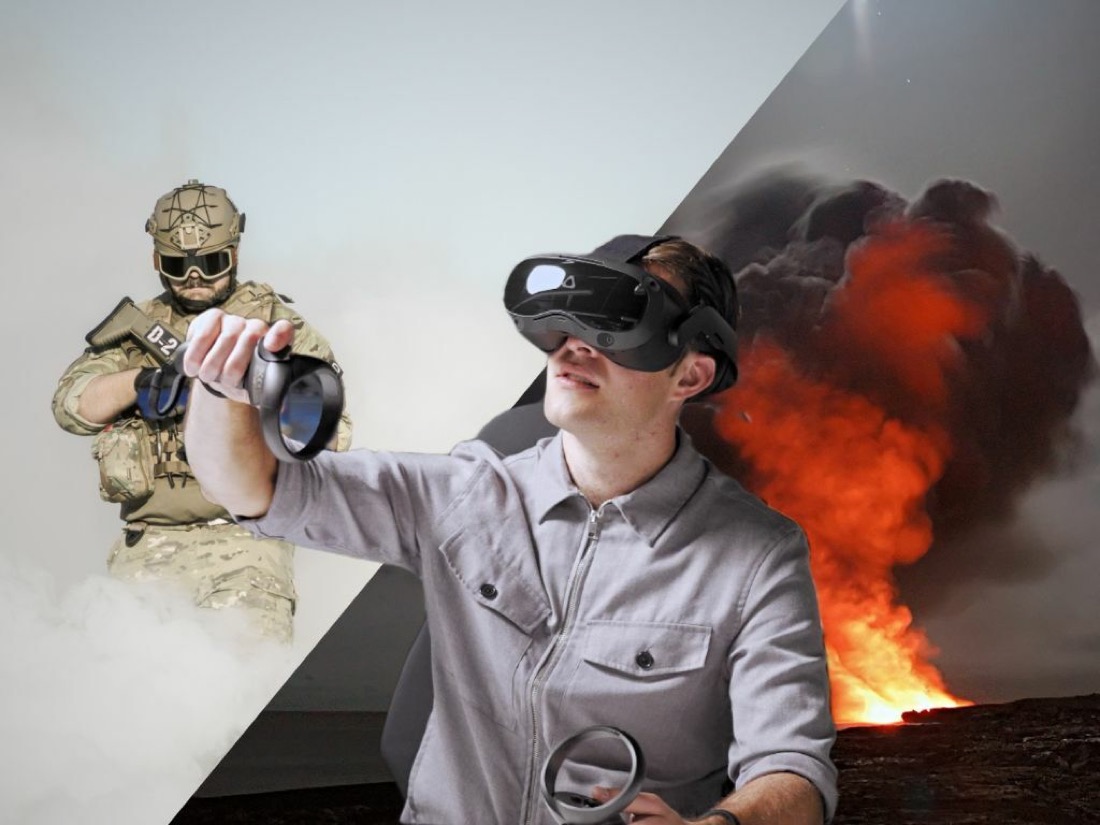
PTSD
Graded exposure for trauma from violence, war, disasters, and accidents.
OCD
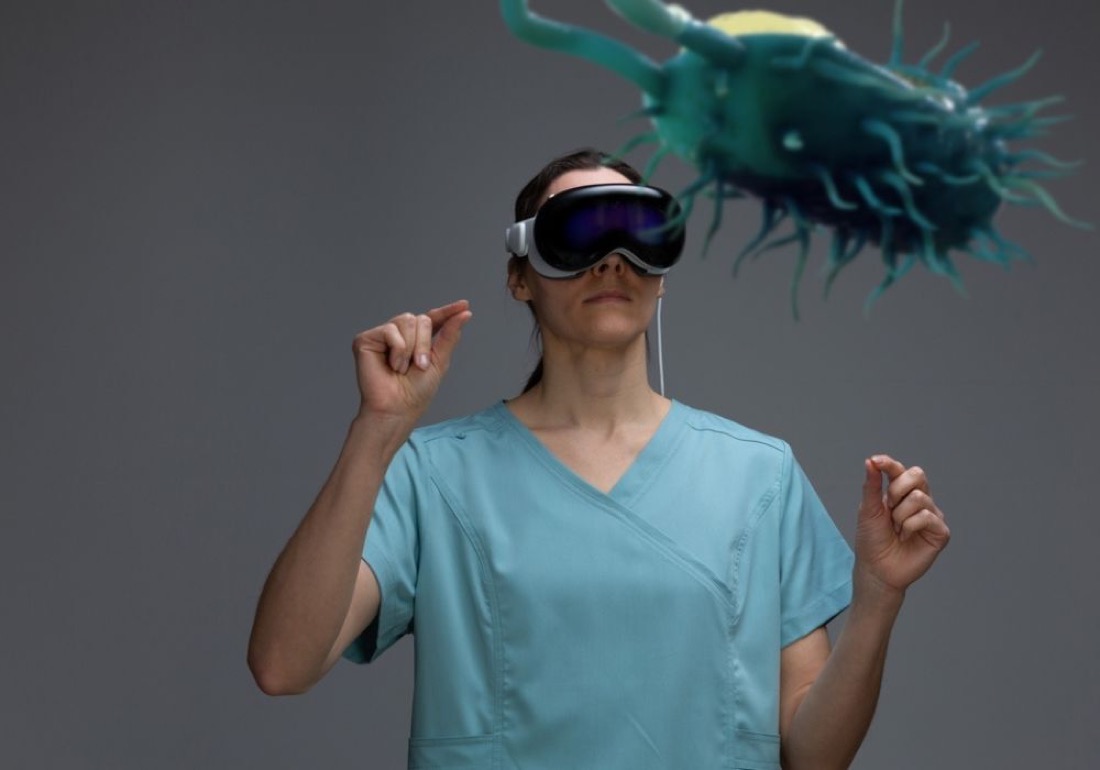
Contamination and everyday‑difficulty scenarios for exposure and response prevention.

Addiction
Craving‑induction environments for alcohol, food, and smoking.




AI Safe Place
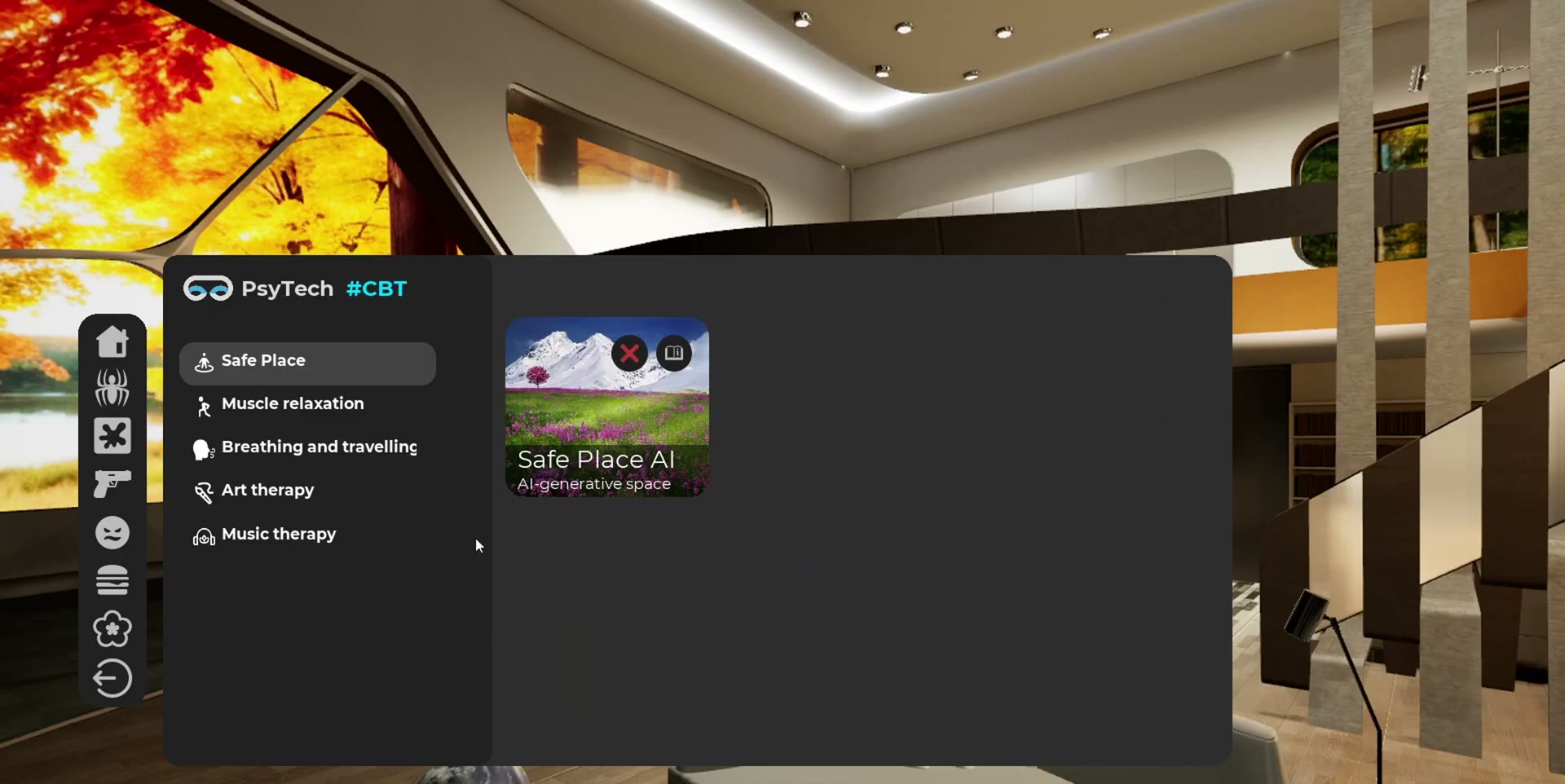
Your client describes somewhere calm; the platform builds it around them as a personalized 360° environment. The relaxation suite also includes breathing exercises across 40+ nature scenes†, guided mindfulness, virtual travel, and art, sound, and muscle‑relaxation practices.
“During trauma therapy, we often use a technique called the Safe Place… some people struggle to imagine such a place on their own. In these cases, PsyTech's AI‑powered Safe Place can be an excellent resource.” Dr. Gianni Serra — clinical and digital psychologist (CBT)
Beyond the session
What comes with the software.
A learning platform, included
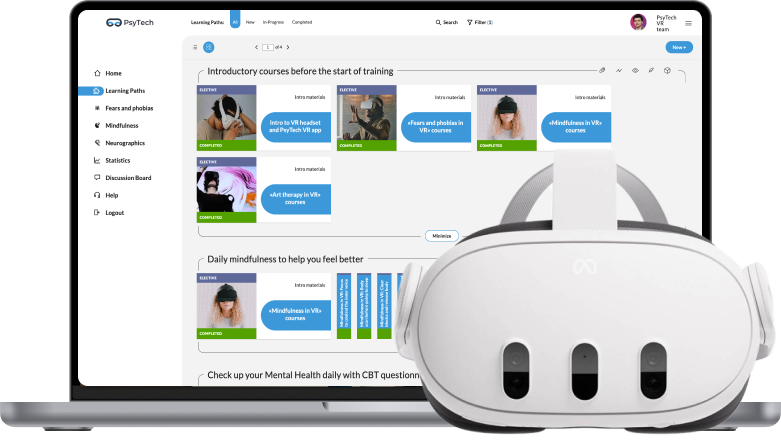
Implementation guides, automated CBT questionnaires, and tools to write your own materials and share them with your team.
Workshop & certification
A clinician workshop and certification program to train whole teams.
Every session, archived
Statistics, distress ratings, and biofeedback history stay on file, comparable across sessions and exportable.
Switching providers?
A migration plan carries your practice over from another VR platform without starting again.
Distributor program
Regional partners bring PsyTech VR to clinics in their own markets and languages.
Real‑time physiology
eVu biosensor integration streams heart rate and physiological response into the session view, next to what the client reports.
Evidence
Clinically grounded. Publicly documented.
Published research
Peer‑reviewed studies of VR exposure therapy, and PsyTech VR's own published research program.
Read the researchUsage protocol
A downloadable, session‑by‑session protocol for running VR exposure therapy in clinical practice.
See the usage protocolClinician workshop
Live training on protocol design, contraindications, and day‑to‑day use.
Join a workshopPricing
Priced in the open.
Pricing is per headset and published here in full. Plans start at $180 per month, available in the US and EU. Volume discounts on request.
Basic
$180/mo
per headset · bring your own headset
- Full protocol & scenario library
- HIPAA & GDPR compliance
- Onboarding included
- Email + chat support
- Cancel any time
Standard
$2,575
first year, per headset · renews $2,160/yr
- Meta Quest 3S included
- Everything in Basic
- Custom onboarding
- Dedicated account manager
- Priority support
Premium
$2,645
first year, per headset · renews $2,160/yr
- Everything in Standard
- Hardshell case included
- Comfort head strap included
Institutions usually start with several headsets. Talk to us about volume.
Questions
What clinicians ask first.
Do I need to be technical to run VR sessions?
No. If you can use your phone and your laptop, you can run a session. Sessions launch from your computer, and onboarding walks you through the first one.
What equipment do I need?
A Meta Quest, PICO, or HTC headset, plus the Mac or Windows computer you already use. On the Basic plan you bring your own headset; Standard and Premium ship with a Meta Quest 3S.
Does PsyTech VR support both CBT and EMDR?
Yes. The platform carries protocols for both CBT and EMDR, including an EMDR kit, across exposure scenarios for fears and phobias, PTSD, OCD, and addiction.
Can I run remote or group sessions?
Yes. Sessions run one-on-one or as guided groups, in person or remote, with the clinician controlling every scenario from their own screen.
Is PsyTech VR HIPAA and GDPR compliant?
Yes, on both. Documentation for HIPAA and GDPR is published in full.
How are sessions measured?
Distress ratings, session statistics, and biofeedback history are captured in the clinician dashboard during the session — evidence for your notes, not extra work afterward.
Can I switch from another VR therapy provider?
Yes. PsyTech VR offers a migration plan that carries your practice over from other VR providers.

Book a demo
See a session for yourself.
A live walkthrough of an exposure session on your screen, run by a specialist who does them every day.
or write to sales@psytechvr.com · +1 (888) 429‑4212